New Mountain Climbing Adventure Trips

Morocco 2009 ~ Trekking to Jebel Toubkal, the highest mountain in Northern Africa

Mount Ararat ~ August 2009 - Climb to the summit of the highest mountain peak in Turkey

2011 ~ North & South Pole Expedition - Dogsledding & cross country skiing - completed in 1 calendar year

History of Machu Picchu

Source: www.enjoy-machu-picchu.org

The fortress of Machu Picchu was occupied during different periods. Judging from the crónicas (early written history), the building style and the ceramic articles found, the following Periods have been calculated:

Early: 1300 ad

Classical: 1400 ad

Imperial: 1533 ad

Transition: 1533-1572 ad

The history of Machu Picchu

Most modern archaeologists and historians coincide that Machu Picchu was built by the Inca Pachacutec, the greatest statesman in Tahuantinsuyo, who governed from 1438 to 1471. Archaeologists infer that the citadel’s construction dates from the fifteenth century approximately, a date confirmed by carbon 14 (radioactive carbon) dating.

Machu Picchu’s construction coincides with the start of the expansion of the small feudal kingdom of the Incas. According to archaeologists, the final battle defining the Incas’ victory over the Chancas, a prestigious victory that gave much power to Inca Pachacutec, was fought in this area.

Pachacutec was the first Inca to expand beyond the valley of Cusco after his epic victory over the Chancas. He was the author of Tahuantinsuyo’s expansion and is recognized as the “constructor” of Cusco. This was one of his greatest works.

Machu Picchu’s origin is attributed, with a certain degree of authority to Pachacutec, a warlike leader, noted for both territorial conquests and the development of religion and spirituality. This is why present archaeological researchers tend to support the theory that it was a royal hacienda destined for the worship of the Inca’s gods, as well as a mighty challenge to the monarch’s construction skills.

Built as a refuge for the elite of Inca aristocracy, the fortress was located on the eastern slope of the Vilcanota Cordillera, some 80 km from Cusco, the capital of the empire. Its strategic geographic location was amazingly well chosen. Surrounded by steep cliffs and secluded from the sight of strangers by the thick jungle around it, the citadel of Machu Picchu had the special virtue of possessing only one narrow entry point, which enabled a successful defense by a handful of warriors in the event of surprise attack.

Occupied by at least three generations of Incas, the fortress of Machu Picchu was abandoned in a sudden and mysterious way. The most likely theories explain its disappearance from historical memory by the fact that its existence was unknown to the lower castes, and all but the small circle of the Inca’s immediate retinue were forbidden to approach it.

Pachacutec’s conquests included the valley of Tampu, that was inhabited by a sister tribe to the Cusco, but one that did not escape its all-encompassing rule. Due to its natural beauty and mild climate (one of the best in the Andes), as well as its fertile soil, Tampu was chosen by Pachacutec as the seat of the new imperial nobility, and the valley was embellished with several of Tahuantinsuyo’s most attractive cities, such as Ollantaytambo and Machu Picchu. The choice of Machu Picchu’s site must have been made with great care, because it was, and still is, the ideal place to locate a center for worship. According to researcher Antonio Zapata, it is located in a mountain chain of sacred significance, starting at Salcantay (the apu, or great spirit) and ending in Huayna Picchu. It was a privileged spot to view the heavens and the movements of sun and stars, which were the deities of the Incas. Moreover, according to his research, there was a nearby quarry supplying white granite of very fine quality.

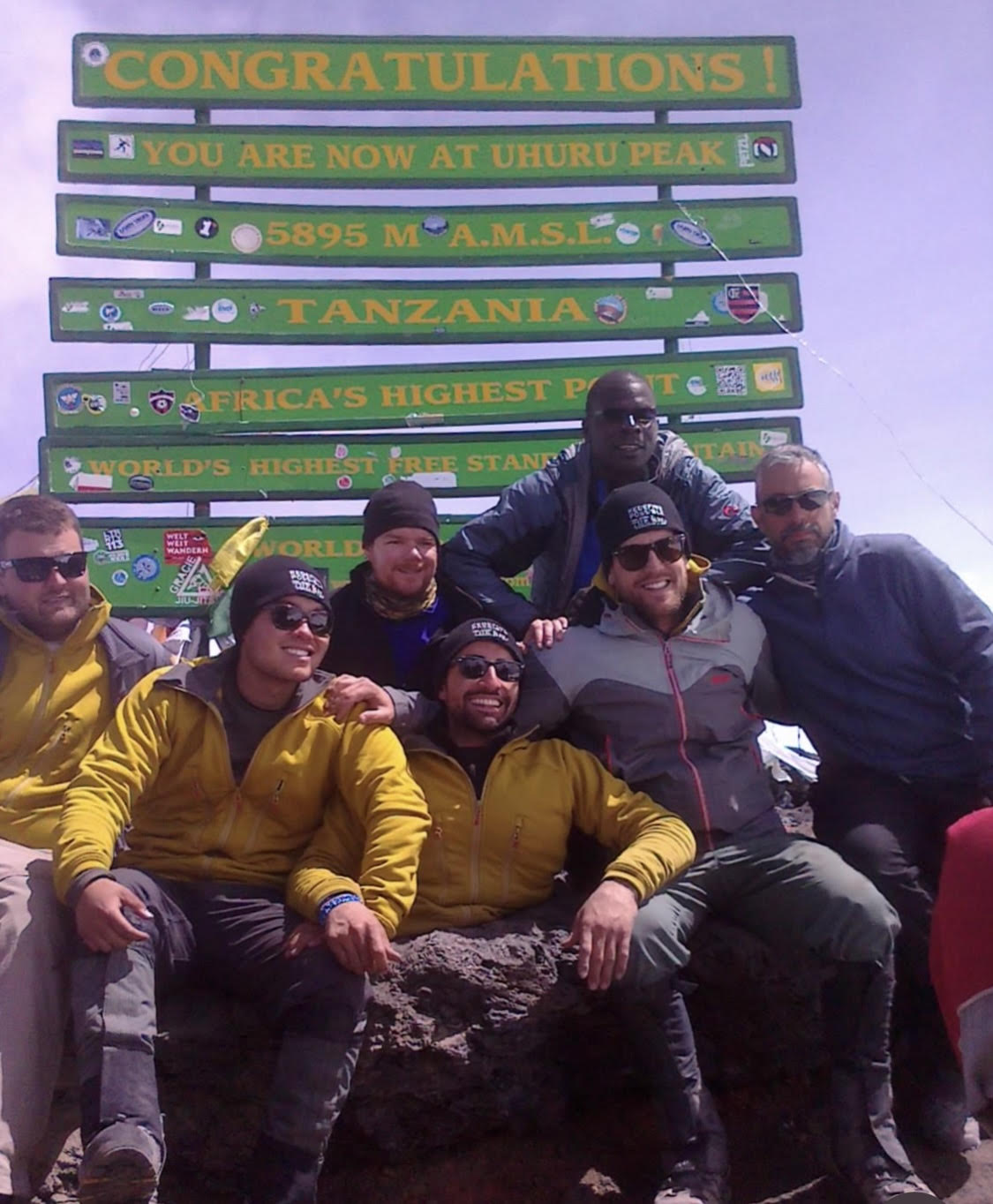
Kilimanjaro 2008

Out of the African plains, Kilimanjaro rises majestically to 19,340 ft. Mount Kilimanjaro is a study in contrasts. Starting out from dry savannah, we ascend through a series of different ecosystems - rainforests and moorlands - to emerge at a mile-wide volcanic caldera, covered in snow. A hike up Kilimanjaro is climatically a walk from the equator to the North Pole in four days. Few mountains match the majesty and mystique of Kilimanjaro.

Our journey begins with a flight that lands right at the foot of the Kilimanjaro mountain. The wildlife experience commences minutes later at the Springlands Hotel.

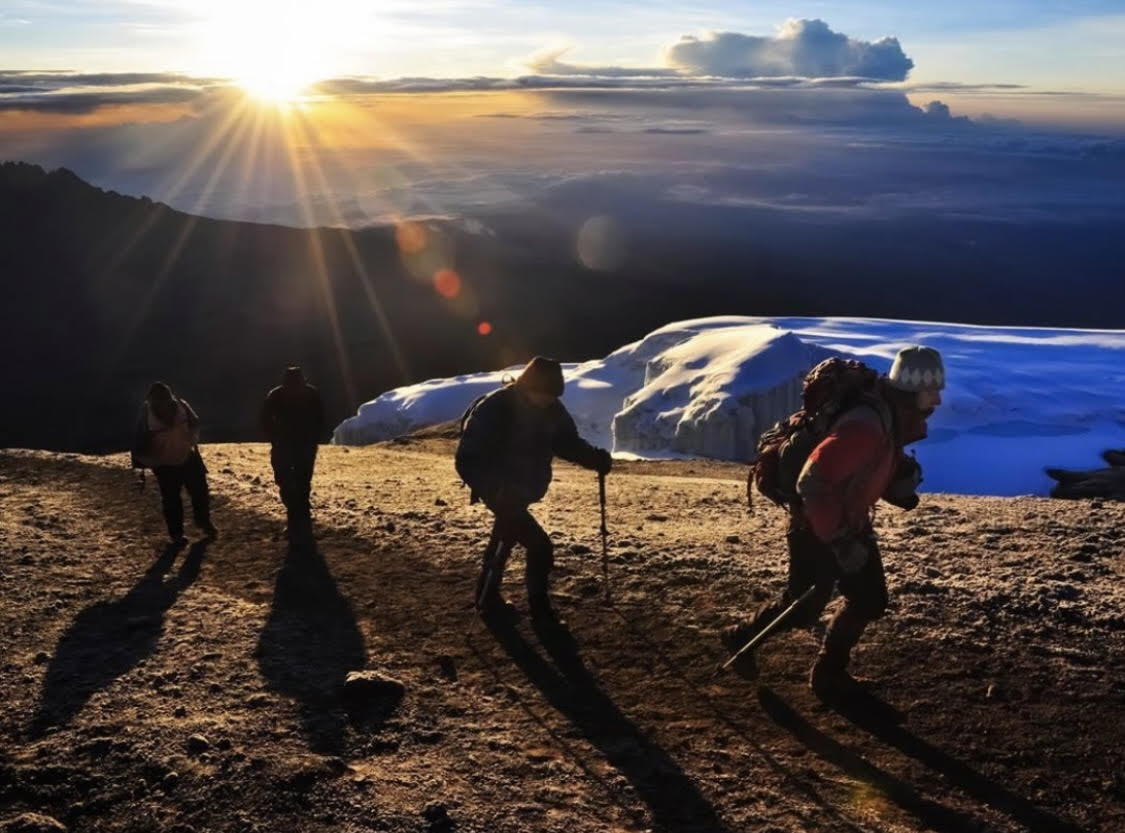
Our trek up the Kilimanjaro mountain avoids the frequently touristed path in favour of the more picturesque back route for the final ascent. This highly exclusive and rarely utilized footpath affords trekkers superb exposure to the area’s isolated and undefiled nature. The climb will take us through swiftly changing conditions while revealing remarkable views of east Africa’s peaks and plains. On the eve of our summit day, we will depart our camp 15,000 ft and make our way through the dawn, reaching the summit peak by early morning. In this rare setting, we can savour the view of a new dawn over Africa - Kenya to the North, Tanzania to the south. It’s a vision that will stay with you for the rest of your life.

What follows is one of the greatest wildlife experiences in the world. We head westward overland to Lake Manyara and the Great African rift valley, then onward to the Ngorongoro Crater - often considered the eighth wonder of the world, and one of the few places where the rare white rhino can still be found. From there, we go on to discover the Olduvai Gorge and the Serengeti Plain, home to more than three million animals - 35 major species in all. Perhaps the most underestimated of the seven summits, Kilimanjaro at 19,339 ft, is an extreme high altitude climb. Your greatest chance of a successful summit is climbing with an experienced mountaineer who specializes in high altitude. Not only do highly experienced guides increase your chance of standing on top, but do so in a healthy and strong manner.

2008 Dates
January 7, 2008 Available
January 29, 2008 Available
February 7, 2008 Limited availability***
February 27, 2008 Available
June 31, 2008 Available
July 11, 2008 Available
July 31, 2008 Limited availability***
August-September dates to be confirmed

2007/2008 Land Cost
$3,955 USD
*** led by Paul DeAngelis Payments
20% deposit with application
Balance due 90 days prior to departure
**Payment plans can be offered

Land Costs include the following:
All Tanzania transportation
All Hotel accommodations in Tanzania during listed itinerary. (double occupancy)
All group equipment, such as tents, stoves, etc.
All meals (B,L,D) during the climb
Porters, drivers, guides, park fees and climbing permits
Experienced guides and camp staff
Porters
Scheduled accommodations, including two night accommodations before the climb, quality expedition camps on the mountain
All meals while staying in camps or lodges (excluding drinks)
All group camping and cooking equipment
All land transportation on scheduled arrival and departure dates and times

More Information

Mt. Aconcagua: mission completed

by Sheila Rupp

Nucleus Journalist

www.kirtland.af.mil

3/20/2007 - KIRTLAND AIR FORCE BASE, New Mexico — Three people emerge over the peak of Mount Aconcagua - three people accomplishing a dream of setting foot atop the highest peak of South America. A large personal accomplishment but an accomplishment for a much larger force: the U.S. Air Force.

Capt. Rob Marshall, 1st Lt. Heidi Hofstetter and Justin Henkel reached the peak of Mount Aconcagua, Argentina, Feb. 27 at approximately 5 p.m. They left the United States Feb. 12 and made the long trip to Argentina.

Climbing as part of the U.S. Air Force 7 Summits Challenge, co-founded by Captain Marshall, a member of the 71st Special Operations Squadron here, the trio reached the peak and raised the Air Force flag. Mount Aconcagua is the third of the seven peaks the 7 Summits Challenge team seeks to complete in the name of the Air Force.

Captain Marshall founded the challenge with Capt. Mark Uberuaga of the 21st Special Operations Squadron at Royal Air Force Mildenhall, England, with the dream that Airmen would climb to the highest peaks of each continent. Several years after first meeting, their dreams are realistic goals that they are achieving with Air Force pride.

“The thing (the challenge) has grown arms and legs; it’s really started to develop. With each peak completed it gets more and more real and hopefully soon, it’ll start walking,” Captain Marshall said.

Captain Marshall climbed with the 7 Summit Challenge team in July 2005 to reach the summit of Mount Elbrus, Russia, and in July 2006 when he and a team reached the peak of Mount Kilimanjaro, Tanzania. Lieutenant Hofstetter, a C-130 pilot stationed at Dyess Air Force Base, Texas, and Mr. Henkel, a former special operations intelligence officer, joined the 7 Summits Challenge for the first time in the Mount Aconcagua climb.

When the trio arrived in Argentina, they met up with their guides and more climbers in the city of Mendoza, where they acclimated to the city, time zone and elevation. The team expected the weather to be quite warm as it was summer for the region, but high winds and cold weather surprised them.

Preparing for the arduous climb, the group took day hikes and treks out of the base camp, Plaza de Mulas. Each day, groups of climbers would come down the mountain with bad news of failed attempts, poor weather and bad conditions. Captain Marshall said the bad weather never hurt the spirits of the group; they were still unwavering in their quest to reach the summit.

“We weren’t really all that deterred, but we were still worried about the conditions - but even that made us even more determined to raise the Air Force flag,” Captain Marshall said.

While at the base camp, Captain Marshall, Lieutenant Hofstetter and Mr. Henkel would practice what are called cache-and-carry runs - trips to move unessential gear up to higher points in the climb and coming back down to sleep, what Captain Marshall calls “climb high, sleep low.” Weather wasn’t improving much and they heard that a group of 10 climbers had to sleep in one tent because high winds had destroyed their other tents. A climber also went missing during their time at the base camp.

Luckily, the weather changed just before the challenge team, guides and group left in the push for the summit. The sun began to shine again, though winds were still high and the temperatures were still low, but the snow had stopped falling. During the first few days after leaving the base camp, the group spent a lot of time in their tents trying to keep warm and hoping the tents would hold up to the high winds. While spending two nights at the first camp, Plaza Canada, the group heard about two deaths up ahead. They moved on to spend one night at the Nido de Cóndores camp and one night at the Berlin camp, which was at 19,000 feet.

The night before the summit, Captain Marshall said the group couldn’t sleep because of the high winds and building excitement. As the three roused on the morning they hoped to reach the summit, the sun rose high over the mountain and shone brightly. Captain Marshall said the three were ready to go long before the rest of the group and the guides let them go on ahead to begin their final push.

“I think it was because we were military but we were ready to go on time and when we took off, we stayed in front of the group the whole time,” he said.

The temperature hovered around 10 degrees — 20 degrees below zero when the wind chill was factored in. They reached the 22,841-foot summit at 5 p.m. on Feb. 27, 10 hours after leaving the Berlin camp. The Air Force climbers were the only members of the group to reach the summit. They unfurled the Air Force flag and proudly raised it. Despite being physically exhausted, an adrenaline-filled Captain Marshall still had to perform 50 push-ups in the name of the Special Operations Warrior Foundation, raising approximately $200 for his push-ups alone.

SOWF provides college scholarships and educational counseling to the children of special operations personnel who are killed in training accidents or combat missions. During the Mount Aconcagua trip, the challenge raised approximately $3,000, which brings the 7 Summits Challenge total to more than $15,000 for SOWF.

After basking in the remaining sunlight and enjoying the views from the peak, the trio had to begin the long trek back down the mountain to get into camp before sunset.

“When you reach the summit, you’re only half way done,” Captain Marshall said.

The team returned to the United States March 5 successful in climbing the third peak of the challenge. Captain Marshall said that although definite plans for their next endeavor in the challenge can’t be made at this time because of training schedules and operations, they hope to climb the remaining four summits by 2011.

Captain Marshall said the goal of the 7 Summits Challenge is to increase military morale, promote personal fitness and growth, raise awareness for a superb charity and let the American public see what sort of people are serving the nation in uniform.

Anyone interested in joining in on the next climb is welcome to take part. For more information, to see pictures of past climbs and read about the SOWF, visit www.usaf7summits.com.

Golden Retriever Scales Aconcagua

Compiled by Outside Online

February 7, 2003 A golden retriever, outfitted with boots, goggles, and a snowsuit, scaled the western hemisphere’s highest peak last week.

The two-year-old Rubia, who had been training to climb 22,834-foot Aconcagua since she was seven months old, conquered the Argentinean peak as part of a study on how rescue dogs function at high altitude.

The dog’s human companions, Spanish climbers Carlos Valverde and Marc Ortega, fed the four-footed climber a special diet and rubbed cream into her paws to prevent injuries.

“The dog would react and recover better than we would,” one of Rubia’s fellow climbers told the BBC.

While animals aren’t usually allowed on the mountain, officials made an exception for Rubia because of her participation in the rescue animal study. The golden retriever was roped to Valverde and Ortega for the entire climb.

Rubia may not have been the first canine climber to reach the summit. Nearly a decade ago, the Argentinean newspaper Clarin reported that a stray dog was accompanied a group of Austrian and German climbers to the top.

Other dogs have soared even higher. In 1957, a Russian mutt named Laika became the first animal to orbit the earth, according to Space Today Online. Aboard Sputnik 2, Laika circled the earth at an altitude of about 2,000 miles. Between 1957 and 1961, at least 13 other dogs headed skywards as part of the Russian space program.

Aconcagua Facts & History

Name/Mountain

Aconcagua, “The Sentinel of Stone”. Its name has roots in the Quechua language and when translated means “The Sentinel of Stone”.

Aconcagua, at 22830 feet (6959 meters) is the highest point in the Western and Southern hemisphere, towering above the surrounding peaks in the Argentine Andes. The mountain stands on the border with Chile, some 30 km (a day-and-a-half hike) from the Puente del Inca settlement. Aconcagua does not lie in the actual Andes, but in the Frontal range, slightly to the east. It has a very steep and massive face on its south and a gentle slope on the north, with a huge glacier, the Polish glacier, flowing to the east and a series of aretes and couloirs to the west. As the highest point in South America, Aconcagua is one of the much sought after “Seven Summits” and a world renowned peak.

The mountain has two summits - North (6959 meters) and South (6930 meters), joined by a ridge (Cresta del Guanaco) approximately one kilometer long. Various ridges radiate from each summit and the whole massif is isolated from other high peaks. Only to the northwest is it connected by a high snow ridge with the surrounding mountain systems. The usual approach is from the south up the Quebrada de los Horcones, which circles the western flanks of the peak, to the Plaza de Mulas base camp at a height of 4230 meters. From here 3 routes start: the normal via the Horcones Glaciar Superior and north ridge, the West Buttress route, and the South-West route. The best climbing period is mid-November to March. On the normal route, refuges exist at heights of 5850 meters and 6480 meters.

First Ascent

While the first summit of Aconcagua is credited to Swiss Climber Mathias Zurbriggen, there are traces of Inca civilization and culture near the summit. The name itself hearkens back to indigenous roots, the Quechua word Anco (white) and Cahuac (sentinel). Much like the explorers of the Himalayas, the passes around Aconcagua came into play during military expeditions. In 1817, General Jose de San Martin crossed the range in successful efforts to liberate Chile from Spain. By 1950 most sides of the mountain were climbed with variations of these routes being added to the long line of successful summits.

More History

Paul Gussfeldt, the German mountaineer, made the first known attempt on Aconcagua in 1883. He reached 6000 meters on his first attempt by following the North ridge. On his 2nd attempt he failed to get to 6000 meters! The Fitzgerald expedition, in January 1897, attempted the mountain and they were the first expedition to use the Horcones valley approach. On 1/12/1897 Fitgerald’s Swiss guide Matthias Zurbriggen reached the ridge between the two summits. Matthias Zurbriggen made the summit two days later by himself. Matthias Zurbriggen was already famous in Switzerland and New Zealand, where Matthias made numerous first ascents as well as the second ascent of Mount Cook. The Polish Glacier was the second route to be pioneered on Aconcagua. Other expedition members followed later. V.M. Conway was the next to reach the Summit nearly two years later; however, he stated he stopped short of the very top out of deference to Fitzgerald, something later regretted. Eilert Sundt made the first winter attempt in 1915 with two other climbers; However, the party were unable to reach the Summit because of a cornice.

The 1934 Polish Andes Expedition established a new route, climbing what is known as the Ruta del Glacier de los Polacos, on the East face in alpine Style !. In 1947, Thomas Kopp and Lothar Heroldd made the traverse of the summit ridge to the south peak, discovering a carcass on of the guanaco en route. This discovery has led to speculation about the possibility of Inca ascents of the great peak. In 1953 the Swiss couple, Frederic and Dorly Marmillod, with two companions, traversed across the western flanks from Plaza de Mulas and ascended to the South Peak via the South-West ridge. In 1951, W. Foerster, L. Krahl and E. Meier, repeating Gussfeldt’s route, succeeded in joining up with the ordinary route at 6200 meters. Finally, in 1954, a strong group of French climbers made a route up the south face, one of the hardest in the whole of the Andes.

Since 1954 the face has been climbed by a variety of routes. In 1966, the Ruta de los Argentinos was climbed to the right of the French route and, in the same year, the Central Couloir, which runs between the French and Argentine routes, was climbed. In 1974, Reinhold Messner, solo climbed a direct finish to the French route, while yet another variation was added by the 1981 Japanese expedition.

Deaths

Several climbers normally die on Aconcagua every year.

Aconcagua from summitpost.org

 Source: www.summitpost.org

Aconcagua is the highest mountain in the Western hemisphere, located in western Argentina, near the Chile border. There are about 3,500 climbers trying the summit each year (info from 2002). The ‘Normal Route‘ is non-technical - a walk-up, following the Northwest Ridge. It is the altitude that poses the most problem. That and the sense that this is an easy climb. Every year people die because they underestimate the task at hand. Respect this mountain and you will fare better. You should not attempt alone, you should always have someone watching you. Much of the hiking is on scree. On the Normal and Polish Traverse routes there are no permanent snow fields, but crampons and ice axe may still be required in some sections. If you are fortunate the final 1000 feet is covered with ice and snow. You can then crampon up this much more easily than when it is loose scree after a dry winter. This year December 2005 due to the heavy snow the previous winter had good snow early on in the Caneleta. But by January 10th 2006, the Caneleta was dry making the top section much more difficult.

Getting there and currency issues, customs


Enlarge

Aconcagua from Casa Piedra in the early morning.

Fly to either Santiago (Chile) then Mendoza (Argentina). Or Buenos Aires then Mendoza. Take the bus to Puente del Inca or Penetentes. The entrance to the National Park is either at Puenta del Inca (normal route and south face). Or the through the Vacas Valley near Penetentes (For the Polish Glacier, Polish Traverse and Vacas routes).


You must go to Mendoza Argentina in person to get your climbing permit.


An issue if you go through customs at Santiago airport. There is a good chance that you will have all meat and dairy products from your expedition food confiscated upon entering Chile. Stay in transit and take a short (45 min) flight on Lan Chile or Aerolineas Argentinas to Mendoza, Argentina. This will allow you to keep your food, get your permits, possibly see Aconcagua from the air as they fly close to it at times, and save the 100$ U.S. tax Chile imposes on Americans. 45$ for Canadians and other nationalities.


If you are entering Chile by bus this will not apply.


Possible food issue. Ourclimbers had their bags searched in Mendoza Argentina for certain food items. While normally climbers are treated seperately in this respects, as the foreign currency is valued we are not hassled. They conficated some food items such as peanuts and items that had been repacked not in the original packaging. Among the items taken were believe it or not..gummy bears. We think the staff was hungry. I packed all my food in 3-day packs in seperate stuff sacks labled, base camp, camp one, and camp two. These were packed at the bottom of my bag under everything and looked like a hassle to get to and open. Thus the customs were reluctant to get that deep in the bottom of my bag. The people that were searched had packed their food in clear plastic making the customs agent job too easy. So pack your food accordingly to avoid any unnecessary hassles.


Enlarge

White Rocks sunrise

For flights try.

Aerolineas Argentinas - USA - Home Page

www.travelbeyond.com

www.varigtravelvacations

United Airlines

American Airlines

Lan Chile

Air Canada


Enlarge

Aconcagua from 2.5 hours out of Plaza Argentina

The Argentine Peso was devalued several years ago between 50-60%. The US dollar is widely accepted everywhere, rates of exchange as of 16,01,06 is 3 pesos for each USD.

A steak dinner with wine can cost $6.00 USD. Check out and compare the rate at the airport, your hotel and the various Cambios on San Martin. They are all about the same. See if your hotel will give you a better room rate depending on what currency you will be paying in. Some hotels and stores offer better rates if you pay in cash as opposed to using credit cards. When changing money in most cases you will be asked for your passport so keep it handy. There is a lot of suspision of counterfit bills especially 100 US. Try to bring down bills that are as new as possible. Older scruffy ones can and will be rejected.

Permits


Enlarge

The summit ridge

Permits 09/09/05 information gathered from Rudy Parras web site

To enter ACONCAGUA PROVINCIAL PARK, you have obtain a permit.

You have to fill out the forms personally. Permits are sold EXCLUSIVELY at

SUBSECRETARÍA DE TURISMO på San Martín 1143. Close to Plaza Independencia. Most cabs know where this is.


When you apply for your permit in Mendoza you will get a ´banking slip´ from the park office, then go to a nearby “Locatario” to pay your permit fee. Then you will return to the park office and get your ´climbing permit´.The whole process takes one or two hours now, more with high season line ups.


Enlarge

The south face from the air

HIGH SEASON: From 15th December of year 2005 to 31st January 2006, a permit costs:

# Climbing USD$ 330 20 days

# Long Trekking USD$ 60 7 days

# Short Trekking USD$ 40 3 days


MEDIUM SEASON: From December 1st to December 14th, 2005, and from February 1st to February 20th, 2006 a permit costs:

# Climbing USD$ 220 20 days

# Long Trekking USD$ 50 7 days

# Short Trekking USD$ 30 3 days


LOW SEASON: From November 15th to November 30th 2005 and from February 21st to March 15th 2006

# Climbing USD$ 110 20 days

# Long Trekking USD$ 50 7 days

# Short Trekking USD$ 30 3 days


Validity of the permits (as from the date of access to the Park) Validity of the permits Climbing 20 days. Long Trekking 7 days Short Trekking 3 days.

Proceeds from the duties are alloted (supposed to be) to the maintenance and protection of the ACONCAGUA PROVINCIAL PARK.


Off –season (from March 16 to November 14) access to the Aconcagua Park is no longer free. A permit must be purchased in Mendoza or at the Park Rangers’ Shelter in Horcones Valley. The price of admittance is the price charged during the high season even if the rescuing service is not provided. Neither doctors nor park rangers are available during this period. However, for a “special” price, there is an exception between March 16 and April 1st., of each season.

To access the Aconcagua Park within these periods, for trekkings or to climb, we suggest contacting the Aconcagua Park’s authorities. There are restrictions regarding the access of MINORS to the Park: they will have to exhibit pertinent authorization signed by both parents and certified by Public Notary or their respective Consulate or Embassy. For further information, please, contact the RENOVABLE NATURAL RESOURCES BUREAU (Dirección de Recursos Naturales Renovables) located in General San Martín Park, phone + 54 261 425 5090 or + 54 261 425 7065 (from 08:00 AM to 01:00 PM) e mail: aconcagua@mendoza.gov.com.ar


CLIMBING AND TREKKINGS PERMITS The permits must be given in person to each visitor and only in Mendoza. Trekking and tourism agencies are not authorized anymore to get the climbing permits for visitors as it was in the past. Each climber must come in person to Mendoza city to get it. The permits can not be bought either at Puente de Inca or Punta de Vacas. The control of permisses is done in laguna Horcones (normal and south face), the same as in the Rio Vacas (Polish and Polish traverse routes) by the park-rangers. Anywhere inside the park, the permit or the receipt may be required to be shown.


(Passport or Identity Card required). Neither medical certificate or evidences of insurance are necessary.

Payment may be either in Argentine Pesos or in U.S. Dollars. No credits cards or checks are accepted. This should not take to long as the staff are normally pretty used to their jobs and are usually pleasent.


There now are doctors at the two main base camps. (Plaza Argentina and Plaza des Mules) You will after seeing the Rangers have to check in with the base camp doctor and will get an examination which will determine whether you are fit to go higher. This is manditory now and a good idea.


One other important item of note. Occording to the information posted at the permit office and speaking to the doctors at Plaza Argentina. The taking of the drug Diamox is forbidden. The park staff opinion on this is that it can mask the effects of HAPE and causes more problems than good. The decision is up to you but be advised they may turn you around if they find out you are taking this drug.


# Permits are valid from the date of entry to the Park


# Argentine citizens are entitled to a 50% discount on the above prices.


Permit / garbage information from: Corax Date: Feb 05, 2005 11:26 PM

The following is to be found on the back of your climbing permit:


You will have to pay a U$S 100 fine if you:

* Do not use the baths provided by the park.

* Throw garbage along the park, leave or do not use the numbered plastic bags provided by the park.

* Pollute rivers, streams or waterfalls.

* Enter either with bicycles or pets.

* Damage wildlife, plants and natural, cultural or archeological features which are protected by the park regulations.


You will have to pay a U$S 200 fine if you:

* Throw garbage, forget or loose the numbered bags in the high camps or during your expedition.

* Gather or burn wood in the park.

* Carve insriptions in the stones.


You will have to pay the equivalent of a 2nd permit or an ascent permit if you:

* Go beyond the limits of the length if the stay allowed in the permit or go higher than 4300 mts with short trekking (3 days), long trekking (7 days).


Note:

* Maximum stay is 20 days with ascent permit.

* Horcones ranger station open daily from 8 A.M. - 6 P.M.

* For your safety always check out.


On matters of poop n scoop

When arriving in Plaza de Mulas and Plaza Argentina when you check in the Ranger will register you and hand over a numbered “shit-bag”. This bag will be your companion all the time on the higher reaches of Aconcagua and if you loose it you have to pay a $200 fine. You’re supposed to use the bag as the only alternative for a toilet and if you’re doing your business in nature and are spotted by the guards there is a $100 fine. Be warned, the plastic of the bag is not that thick and is not to be trusted. Double or triple pack it in order to avoid quite disgusting leakage in your back pack. The best thing is to bring a number of smaller bags with you and bag it each time. Cache these smaller bags which should freeze overnight. You can then double bag these in the numbered bag for safer transportation to base camp. Your mule provider is in charge of making sure you have brought this and your numbered garbage bag down to base camp. If you lose it he won’t sign your permit. If he does then he becomes responsible.


If not part of an organized expedition, you have to “be contracted to a toilet service” at BC. Asking around a bit and some big organizers will tell you the price is US$100, some smaller US$5/day or US$10 for the whole stay. If you used the toilet services between 20:00 and 08:00 you may not have to pay anything in some of the places. For those on an extremely low budget an alternative is to camp at the restaurant and use the toilets there. You can always use the restaurants toilet if you are giving them some business.


Mules

Each mule can only take 60 kilos (two 30 kilo bags balanced). So each duffle you bring should not exceed 30 kilos. As a rule clients are allowed 30 kilos including their food. Not including tents and communal gear. You will be charged two days in and one day back for the walk in in the normal route. For the walk out, it will depend on whether you hire mules who just brought gear in or if they came in empty just for you. Try to negotiate in advance for dropoff and pickup. Radios are useful here and the Rangers can be of great help.


For the Polish side you will be charged 3 days in and one to two days out for the approach and its the same story for the walk out as on the normal route.


Mule prices can vary but it works to about 150 USD perday for and mule driver and two mules (120 kilos). This is only a guide things change depending on how desperate you are and availability, size of group. Eight people would use 4 mules (2×30 = 60 kilos per mule) plus probably 2 mules (2×60 kilos of communal gear). You would probably have three muleteers.


Just an example for the Polish Traverse - Group size - 3 people.

December 2001 it cost for two mules in (three days) and one mule out (two days) including the Mule driver $ 750$US

Aconcagua on Wikipedia

Cerro Aconcagua is the highest mountain in the Americas. It is located in the Andes mountain range, in the Argentine province of Mendoza. The summit is located about 5 kilometres from San Juan Province and 15 kilometres from the international border with Chile. It lies 112 km (70 mi) west by north of the city of Mendoza. Aconcagua is the highest peak in both the Western and Southern Hemispheres, as well as the highest outside of Asia. It is one of the Seven Summits.

Aconcagua is bounded by the Valle de las Vacas to the north and east and the Valle de los Horcones Inferior to the West and South. The mountain and its surroundings are part of the Aconcagua Provincial Park. The mountain has a number of glaciers. The most substantial are the north-eastern or Polish Glacier and the eastern or English Glacier.

The mountain was created by the subduction of the Nazca Plate beneath the South American plate during the geologically recent Andean orogeny; however, it is not a volcano. The origin of the name is contested, it is either from the Arauca Aconca-Hue, which refers to the Aconcagua River and means ‘comes from the other side’ or the Quechua Ackon Cahuak, meaning ‘Sentinel of Stone’.

In mountaineering terms, Aconcagua is technically an easy mountain if approached from the north, via the normal route. Although the effects of altitude are severe (atmospheric pressure is 40% of sea-level at the summit), the use of supplemental oxygen is not required.

The second most frequented route is the Polish Glacier Traverse route. This approaches the mountain through the Vacas valley, ascends up to the base of the Polish Glacier, then traverses across to the normal route for the final ascent to the summit.

The routes to the peak from the south and south-west ridges are more demanding and the south face climb is considered very difficult.

Before attempting the mountain climbers need to purchase a permit from the Aconcagua Provincial Park authority in Mendoza. Prices vary depending on the season.

The camp sites on the normal route are listed below. (altitudes are approximate)

Normal route to the summit

* Puente del Inca, 2,740m (8,990ft): A small village on the main road, with facilities including a lodge.

* Confluencia, 3,380m (11,090ft): A camp site a few hours into the national park.

* Plaza de Mulas, 4,370m (14,340ft): Base camp, claimed to be the second largest in the world (after Everest). There are several meal tents, showers and internet access. There is a lodge 500 metres from the main campsite.

* Plaza Canadá, 5,050 metres (16,570 ft): A large ledge overlooking Plaza de Mulas.

* Plaza Alaska, 5,200 metres (17,060 ft): Called ‘change of slope’ in Spanish, a small site as the slope from Plaza de Mulas to Nido de Cóndores lessens. Not commonly used.

* Nido de Cóndores, 5,400 metres (17,720 ft): A large plateau with beautiful views. There is usually a park ranger camped here.

* Berlín, 5,900m (19,360ft): The usual high camp. Windy and exposed, and quite filthy. Many climbers avoid it, and stay slightly higher at Piedras Blancas.

It is common to spend at least one night in Confluencia while trekking to base camp in order to acclimatise properly. Summit attempts are usually made from a high camp at either Nido de Cóndores or Berlín. Although Berlín is closer to the summit, many climbers find that they rest better at Nido and are able to make up for the lost time. Some well-acclimatised climbers also pitch their high camp even further up the mountain, at Piedras Blancas (~6,000m) or near Independencia (~6350m).

The first attempt on Aconcagua by a European was made in 1883 by a party led by the German geologist and explorer Paul Güssfeldt. Bribing porters with the story that there was treasure on the mountain, he approached the mountain via the Rio Volcan, making two attempts on the peak by the north-west ridge and reaching an altitude of 6,500 metres (21,300 ft). The route that he prospected is now the normal route up the mountain.

The first recorded[1] ascent was in 1897 on a British expedition led by Edward Fitzgerald. The summit was reached by the Swiss guide Matthias Zurbriggen on January 14 and by two other expedition members a few days later.

Kilimanjaro, Gasp by Gasp

He was an average hiker. This wasn’t your average hike.

By Steve Hendrix

Washington Post Staff Writer

Sunday, March 18, 2001; Page E04

The sun just came up. And that’s what killed me.

Before I could see, I was merely miserable. My pulse has been pounding in my ears for hours. My lungs bellow franticallyfutile gulps in a merciless vacuum. My legs are noodly and unreliable. My boots barely leave the ground as I drag them a few inches up the slope. It’s no more than a zombie lurch, but without resting between each step my heart redlines and my chest heaves until my ribs ache. This is more than fatigue; it’s fear.

Am I having a heart attack (I’m 36)? Is this the altitude sickness that has killed climbers on this same trail? After six hours of this, I’m as close as I’ve ever been to utter physical bankruptcy.

But at least in darkness, all I could see were my feet shuffling through the feeble two-foot disk of light from my headlamp. Some dutiful clot of neurons has kept me moving forward as the rest of my brain took cover beneath a circular, muttering rhythm that muffled the pain: step-gasp-step.

Now the sun is up. I can see where I am and, worse, what I am, a presumptuous speck a thousand feet above the cloud line on Mount Kilimanjaro’s towering slope. Idiotically, I let the pink warmth on my cheek distract me from my plodding trance and I make the first really serious mistake of the day. I look up.

Oh no. Oh no. I have to be closer than this. There’s no breath for a sob but I feel despair strike me like a slap. I’m supposed to be near the top by now, but the mountain is endless above me; the slope is growing even steeper. Hours to the top, and after that I face another marathon strugglea 10-hour scramble down rocky, slippery trails. Going up is bad, but long descents are agony: knees shrieking, thighs on fire. Standing in a fog of my own panting, I feel my body failing. I can’t do it. I hate this.

I quit.

The first days weren’t so hurtful. In fact, the run-up to the summit of Kilimanjaro was one of the most pleasurable treks of my hiking career. Six days of well-guided, well-fed tramping around one of the world’s most recognizable landforms, followed by one day in the life of Sisyphusan 18-hour ordeal that brought me face to face with one of adventure travel’s most frightening inherent risks: failure.

We had gathered in Kenya a week earlier, six American males ranging in age from 32 to 63, ranging in fitness from lifelong runner to occasional walk taker. Some were friends already, others met for the first time on the Nairobi sidewalk outside the Stanley Hotel as we boarded a bus to Tanzania. But we quickly coalesced as a group around a shared nugget of uncertainty: Just how hard was this going to be?

On the five-hour ride we titillated ourselves, as adventurers do, with overheard tales of Kilimanjaro failure and fear, blackouts and whiteouts, heart attacks, rock slides, frostbite, dodgy guides and dysenteryand lots and lots of folks who just couldn’t do it.

“I get a lot of people who have absolutely no idea what they are in for,” says Mia Favro, a sprightly Swiss expatriate who runs Shades of Africa, a Tanzanian tour and safari company. “You can never tell who’s going to make it. I’ve had marathoners who said it was the hardest thing they’ve ever done and could only make it halfway. You either take the altitude or you don’t.”

At just shy of 20,000 feet, Kilimanjaro ranks fourth among the Seven Summits, the roster of each continent’s highest peak that serves as the basic to-do list for serious mountaineers. (Asia’s Everest tops them all at 29,000 feet; Antarctica’s 16,000-foot Mount Vinson is lowest.) But because of its cliff-free approaches and unforgettable snowcapped profile on the vast African plain, Kilimanjaro is the most popular with amateur adventurers. Unlike the other Seven Summits, any reasonably fit hiker has a chance to reach Kili’s desolate rim without crampons, carabiners or technical expertise.

But rope free doesn’t mean risk free, and far more people start up Kilimanjaro than make it to the top. There is just about half the oxygen in the air at 20,000 feet as there is at sea level, meaning that simply standing still demands a double exertion of heart and lungs. And no amount of training can protect you from altitude’s scariest physiological thunderbolts, which range from headaches and vomiting to edemas that fell youdeadon the side of the mountain as fluid fills your brain or lungs. It really happens.

Outside, Africa rolled by. Lanky Masai herdsmen walked the highway, heavily ornamented and cloaked in red cloth, swinging their ubiquitous staffs. The broad plain, unbroken but for isolated baobab trees, gave no hint we were nearing a mountain almost a mile higher than any peak in the continental United States. We compared gear and training notes. Sometimes we silently gauged one another. “Will he make it?” we wondered. “Will I?”

I contribute my own worst-case anecdote after our first hazy glimpse of Kili’s summit glacier, hanging like a puff of cloud impossibly high above the horizon. Last year, a Washington friend of mine named Margaret McDaniel was part of a team laboring toward Kilimanjaro’s summit. Already spooked by news of two altitude-related deaths a few days earlier, they found themselves suddenly pinned down by a rock slide. They dodged the boulders, but then came upon a German couple she had befriended at earlier camps. The man was standing dazed on the trail. His wife was lying prone, covered by a jacket, killed by a bouncing rock.

“We went up with a sort of intangible understanding that this could be dangerous,” McDaniel says now. “But suddenly it was real. Someone was dead.”

We all had stories to swap. But still we came, cheerfully. Just like McDaniel, we had acquainted ourselves with the risks without firmly shaking hands with the central reality that this vacation could kill us.

Most of the people who make a try at Kilimanjaro each year ant-line it up a single rutted, littered track called the Marangu route. They bunch together each night at a few camps crowded with trinket and soft-drink vendors. Instead, we opted for a more remote trail head far out on Kilimanjaro’s long western rump. Our route across Kili’s largely untrammeled Shira Plateau added two days to our climb and, reportedly, a few crucial degrees of difficulty to our summit attempt. But it gave us extra time to adjust to the altitude and some priceless hours simply to enjoy the unpeopled parts of the mountain.

That’s not to say we would be alone. After lurching though the cedar forests that fringe the mountain’s shoulders, we pulled up to a trail head crowded with men and boys: our porters. They divided our gear, along with our common tents, food and fuel, into separate 50-pound duffels. Eyeing the load, our head guide Gasper Lekule signed up enough folks to carry it: 22 people to support the six of us over the seven-day climb17 porters, four guides and a cook. The rest set out for their homes to wait for another chance to earn $10 a day on the mountain.

We paying climbers carried nothing but our personal loads of water, trail snacks, rain gear, cameras. Everything else disappeared up the trail each morning balanced on the heads of Tanzanian men we wouldn’t see again until we reached camp that evening. Even with full loads, and with climbing togs that often consisted of blown-out tennis shoes and threadbare street clothes, the porters outpaced us by hours.

Two guides remained with us, one at the point setting the requisite slow pace, and a sweep bringing up the rear. It felt liberating to be underway, especially with plenty of air for chatting and laughing. The clouds came, marking the line between bright mornings and rainy afternoons that became a daily pattern. As we gained altitude, the rain thickened to sleet and we watched the clouds climb up the slopes to deliver it. Never had I been so glad of my pricey, extravagant kit: polypropylene underwear, layers of synthetics, a plush sleeping bag. I surrounded myself with unnatural fibers and stayed warm and dry. On Kilimanjaro, good gear tells.

The trail turned slippery and steeper. Charles Moerbeour oldest team member, a soft-spoken retired oilman who now raises longhorns near Austinsuddenly had his feet fly out from under him. He hooked an arm around a small sapling, missing by an elbow a 40-foot slide down the bank. We dusted him off, exchanging a few arched eyebrows. The mountain was tapping us on the shoulder. Kilimanjaro doesn’t turn away all its pilgrims, but it demands of them a supplicant’s posture: a processional pace, a lowered head. “Pole, pole,” the guides say in Swahili. “Slowly, slowly” became our plainchant.

Matthewthe boyish young guide at the head of our linecarried, of all things, our eggs. Deemed too fragile for a porter’s pack, he carried four dozen of them stacked in cardboard pallets bound with twine. I watched them, their numbers dwindling after every breakfast. “If he can get a bunch of raw eggs up Kilimanjaro,” I thought, “he can deliver six amateur climbers.”

Every day we walked and walked and walked, often in rain and snow. The world opened up as we left the trees behind. The Shira Plateau was a long scrubby flat at 12,500 feet that took a day to cross. A stray dog followed us this far, hoping we were one of the poaching parties that sometimes hunt this high. But he gave up when we began to gain altitude in earnest. More of Tanzania spread beneath us, green and utterly separate from the chilly, airless world that drew us ever upward. We rose above even the bizarre shrubs that cling to Kili’s middle ranges. Now only rocks brushed our boots. One morning, we had to wait for the sun to strike the towering Barranco Wall to burn off enough ice for us to scramble up the rock cracks in safety.

Slowly, swinging the collapsible trekking poles thatlike the Masaiwe were never without, we crept up a trail of numbers: 13,000 feet, 15,000, up to 17,000 on one breathless morning and then back down to a safer sleeping altitude. We were beginning to kiss the toes of the summit itself, giving our bodies little tastes of the strange new demands we were putting on them.

The mountain, meanwhile, increased its tests, reminding us to be careful of our health, strength and attitude. We constantly fine-tuned our aches and rumbles from the movable pharmacy brought by Michael Teixido, a physician from Delaware. We ate well at lavish dinners of chicken, stews and pasta, served with rough elegance in the green mess tent. We slept, sometimes fitfully, in tents we found already pitched when we arrived in camp, waking to cups of “bed tea” brought soon after dawn. We began to finish one another’s jokes about the crude latrines, guess one another’s preferences at tableall the shortcuts of fast friendship. We shared equipment, confided fears, watched one another for signs of sunburn and sickness. We were ready to summit.

Free E-mail Newsletters

* Washington Entertainment Guide

See a Sample | Sign Up Now

* Movies

See a Sample | Sign Up Now

* Travel

See a Sample | Sign Up Now

* At Home

See a Sample | Sign Up Now

Climbing to the top of Kilimanjaro from a 15,000-foot base camp is like mounting the stairs of a 500-story skyscraper with a sock in your mouth and a clothespin on your nose. There is just no air. After a midnight breakfast, we set out with four guides (the extras needed to escort down sick or injured climbers).

We walkslowly, slowlywith a silent intensity, a line of bobbing headlamps in the night. Charles Moerbe has been vomiting. His Texas pal John Joseph, a competitive runner, can’t catch his breath no matter how slowly he walks. Michael Tsia, a sportswriter from Honolulu, admits to nausea and a sharp headache. I feel healthy, but after just an hour fatigue has a firm grip on my ankles.

Hours later, when the sun comes up, I’m only on the 400th floor of that 500-story building. I’m supposed to be at the top for dawn. But when I look up, I know in that instant that this day’s sun won’t be casting my shadow across the peak of Kilimanjaro.

I lean against a rock, waiting for a recovery that’s not possible at 19,000 feet. Two guides from another party appear, supporting a climber down the slopea fit-looking young man, now pale and frightened, clearly suffering from the altitude. He too will go home to report failure. As the light grows, I see George Norcrossanother Hawaiian, our strongest hikermaking steady progress. He’ll make it. He’ll have a great story to tell. Mine will always carry an asterisk, a defensive explanation. I had to quit.

Or do I? After 15 minutes of rest I’m beginning to freeze, but I also feel the first flush of defiance against my failing will. I see Michael Tsia, upright in spite of his nausea. John Joseph is twice my age and can barely breathe, but there he is, baby-stepping upward. He and Moerbe have printed greetings to their grandsons that they are determined to photograph at the top. Michael Teixido is beside him, giving both medical and moral support.

If they were strangers, these five tourists would be no example for me. But over six days of shared adventure, they are now my friendsand more. We were group tourists, but we call ourselves a team. And through the pain of exhaustion I begin to believe that.

With a grunt that is half groan, half profanity, I force myself away from the rock. My heart starts jackhammering in my ears, but I fix my eyes on my boot toes and begin a glacial shuffle up the trail. This time, I never look up.

I made it, three hours later. We all did.

Sweat Scale: 5. All sweat, no shower.

Genuine Danger: 4. The worst need not happen, but does.

Bragging Rights: 4. Everest is 5.

Cush Factor: 3. Tea in the tent, but the tent was freezing.

Nature-in-the-Raw: 4. Seven outdoor days of rain and snow felt very natural.

Downside: The hardest thing I’ve ever done.

Upside: I did it.

United Nations Environment Programme and the World Conservation Monitoring Centre

KILIMANJARO NATIONAL PARK, TANZANIA

Brief description: At 5,963 meters Kilimanjaro is the highest point in Africa. This massive volcano stands in splendid isolation above the surrounding plains, with its snowy peak looming over the savannah. The mountain is encircled by mountain forest. Numerous mammals, many of them endangered species, live in the park.

COUNTRY United Republic of Tanzania

NAME Kilimanjaro National Park

IUCN MANAGEMENT CATEGORY

II (National Park)

Natural World Heritage Site inscribed in 1989. Natural Criterion iii

BIOGEOGRAPHICAL PROVINCE Somalian (3.14.07)

GEOGRAPHICAL LOCATION The National Park and Forest Reserve on Mount Kilimanjaro lie very near the border between Tanzania and Kenya north of Moshi in the north centre of the country. The National Park comprises the whole of the mountain above 2700m, including some of the montane forest, and six corridors through the forest belt below. The whole area lies at 2°45′-3°25′S, 37°00′-37°43′E.

DATE AND HISTORY OF ESTABLISHMENT

1910s: Mt Kilimanjaro and its forests declared a game reserve by the German colonial government;

1921: The area was gazetted as a forest reserve, confirmed by subsequent legislation;

1973: The mountain above the tree line (~2700m) reclassified as a National Park by Government Notice 50 and opened to public access in 1977.

AREA National Park: 75,353ha, surrounded by a Forest Reserve of 107,828ha.

LAND TENURE Government, in Kilimanjaro province. Administered by Tanzania National Parks.

ALTITUDE 1,830m (Marangu Gate) to 5,895m (Kibo,Uhuru Peak)

PHYSICAL FEATURES Kilimanjaro is a giant stratovolcano and one of the largest volcanoes in the world. It is the highest mountain in Africa, rising 4,877m above the surrounding savanna plains to 5,895m and covers an area of about 388,500ha. It stands alone but is the largest of an east-west belt of volcanoes across northern Tanzania. It has three main volcanic peaks of varying ages lying on an east-southeast axis, and a number of smaller parasitic cones. To the west, the oldest peak Shira (3,962m) of which only the western and southern rims remain, is a relatively flat upland plateau of some 6,200ha, the northern and eastern flanks having been covered by later material from Kibo. The rugged erosion-shattered peak of Mawenzi (5,149m) lies to the east. The top of its western face is fairly steep with many crags, pinnacles and dyke swarms. Its eastern side falls in cliffs over 1000m high in a complex of gullies and rock faces, rising above two deep gorges, the Great Barranco and the Lesser Barranco. Kibo (5,895m), is the most recent summit, having last been active in the Pleistocene and still has minor fumaroles. It consists of two concentric craters of 1.9 x 2.7km and 1.3km in diameter with a 350m deep ash pit in the centre. The highest point on the mountain is the southern rim of the outer crater. Between Kibo and Mawenzi there is a plateau of some 3600ha, called the Saddle, which forms the largest area of high altitude tundra in tropical Africa. There are deep radial valleys especially on the western and southern slopes.

The mountain is a combination of both shield and volcanic eruptive structures. Over time different flows have produced a variety of different rock types. The predominant rock types on Shira and Mawenzi are trachybasalts; the later lava flows on Kibo show a gradual change from trachyandesite to nephelinite. There is also a number of intrusions such as the massive radial and concentric dyke-swarms on Mawenzi and the Shira Ridge and groups of nearly 250 parasitic cones chiefly formed from cinder and ash. Since 1912 the mountain has lost 82% of its ice cap and since 1962, 55% of its remaining glaciers. Kibo still retains permanent ice and snow and Mawenzi also has patches of semi-permanent ice, but the mountain is forecast to lose its ice cap within 15 years. Evidence of past glaciation is present on all three peaks, with morainic debris found as low as 3,600m. The mountain remains a critical water catchment for both Kenya and Tanzania but as a result of the receding ice cap and deforestation, several rivers have dried up, affecting the forests and farmland below.

CLIMATE There are two wet seasons, November to December and March to May, with the driest months between August to October. Rainfall decreases rapidly with increase in altitude; mean precipitation is 2300mm in the forest belt (at1,830m), 1300mm at Mandara hut on the upper edge of the forest (2,740m), 525mm at Horombo hut in the moorland (3,718m), and less than 200mm at Kibo hut (4,630m), giving desert-like conditions. The prevailing winds, influenced by the trade winds, are from the southeast. North-facing slopes receive far less rainfall. January to March are the warmest months. Conditions above 4000m can be extreme and the diurnal temperature range there is considerable. Mist frequently envelopes much of the massif but the former dense cloud cover is now rare.

VEGETATIONThe mountain has five main vegetation zones: savanna bushland at 700-1,000m (south slopes) and 1,400-1,600m (north slopes), densely populated sub-montane agro-forest on southern and southeastern slopes, the montane forest belt, sub-alpine moorland and alpine bogs. Above this is alpine desert. The montane forest belt circles the mountain between 1,300m (~1,600m on the drier north slopes) to 2,800m. Forests above 2,700m are within the National Park (Greenway, 1965). According to Lambrechts et al. (2001) there are 2,500 plant species on the mountain, 1,600 of them on the southern slopes and 900 within the forest belt. There are 130 species of trees with the greatest diversity being between 1,800 and 2,000 meters. There are also 170 species of shrubs, 140 species of epiphytes, 100 lianas and 140 pteridophytes.

The forest between 1,000 and 1,700m in the south and east has been extensively farmed with remnants of natural forest left only in deep gorges. Dominant species of the submontane forest between 1,300-1,600m in the west and 1,600-2,000m in the north are Croton megalocarpus and Calodendron capense; and of the lower to middle montane forest between 1,600-2,200m in the west and 2,000-2,400m in the north is Cassipourea malosana.On the southern and southeastern slopes from 1,600 to 2,100m the dominant lower montane forest species is camphorwood Ocotea usambarensis; from 2,100 to 2,400m the dominant middle montane forest species are camphorwood Ocotea usambarensis with yellowwood Podocarpus latifolius, a large evergreen, with the tree fern Cyathea manniana, sometimes growing to 7m high. From 2,400 to 2,800m the dominant upper montane forest species are Podocarpus latifolius with Ocotea usambarensis. The subalpine southern and southeastern slopes between 2,800-3,100m have forest of Hagenia abyssinica with Podocarpus latifolius and Prunus Africana; and on the north slopes Juniperus procera - Podocarpus latifolius forest with Hagenia abyssinica. Above 2,800m to the edge of the tundra at 3,500m is Erica excelsa forest.

There is no bamboo zone, nor a Hagenia-Hypericum zone. Above about 4,600m, very few plants are able to survive the severe conditions, although specimens of Helichrysum newii have been recorded as high as 5,760m (close to a fumarole), and mosses and lichens are found right up to the summit. The upland moor consists primarily of heath/scrub plants, with Erica excelsa, Philippia trimera, Adenocarpus mannii, Protea kilimandscharica, Stoebe kilimandscharica, Myrica meyeri-johannis, and Myrsine africana. Grasses are abundant in places, and Cyperaceae form the dominant ground cover in wet hollows. On flatter areas between the upland moor and the forest edge are areas of moorland or upland grassland composed of Agrostis producta, Festuca convoluta, Koeleria gracilis , Deschampsia sp., Exotheca abyssinica, Andropogon amethystinus, and A. kilimandscharicus, with scattered bushes of Adenocarpus mannii, Kotschya recurvifolia and Myrica meyeri-johannis. Various species of Helichrysum are found in the grasslands and in the upland moor. Two distinct forms of giant groundsel occur on the upper mountain: Senecio johnstonii cottonii, endemic to the mountain and only occurring above 3600m, and S.johnstonii johnstonii which occurs between 2,450m and 4,000m, and shows two distinct forms. At all altitudes Senecio favours the damper and more sheltered locations, and in the alpine bogs is associated with another conspicuous plant, growing up to 10m tall, the endemic giant lobelia Lobelia deckenii. Below the tree line, the park includes six corridors through the forest to the mountain foot.

FAUNA The whole mountain including the montane forest belt, part of which extends into the National Park, is very rich in species: 140 mammals, (87 forest species), including 7 primates, 25 carnivores, 25 antelopes and 24 species of bat (Lamprecht et al.,2002).Above the treeline at least seven of the larger mammal species have been recorded (Child, 1965), although it is likely that many of these also use the lower montane forest habitat. The most frequently encountered mammals above the treeline are Kilimanjaro tree hyrax Dendrohyrax validus (VU), grey duiker Sylvicapra grimmia and eland Taurotragus oryx, which occur in the moorland, with bushbuck Tragelaphus scriptus and red duiker Cephalophus natalensis being found above the treeline in places, and buffalo Syncerus caffer occasionally moves out of the forest into the moorland and grassland. An estimated 220 elephants Loxodonta africana (EN) are distributed between the Namwai and the Tarakia Rivers (Tanzania National Parks, 1993) and sometimes occur on the higher slopes. Insectivores occur and rodents are plentiful above the tree line, especially at times of population explosion, although golden moles (Chrysochloridae) are absent. Three species of primate are found within the montane forests, blue monkey Cercopithecus mitis, western black and white colobus Colobus polykomos abyssinicus, and bushbaby Galago sp. and among mammals found there are leopards Panthera pardus, as well as some of the species listed above. Abbot’s duiker Cephalophus spadix (VU) is restricted to Kilimanjaro and some neighbouring mountains. Black rhinoceros Diceros bicornis (CR) is now extinct in the area and mountain reedbuck Redunca fulvorufula is probably extinct (Lamprecht et al.,2002).

Although 179 highland bird species have been recorded for the mountain, species recorded in the upper zones are few in number, although they include occasional lammergeier Gypaetus barbatus, mainly on the Shira ridge, hill chat Cercomela sordida, Hunter’s cisticola Cisticola hunteri, and scarlet-tufted malachite sunbird Nectarinia johnstoni. White-necked raven Corvus albicollis is the most conspicuous bird species at higher altitude. The forest has several notable bird species including Abbot’s starling Cinnyricinclus femoralis, which has a very restricted distribution. The butterfly Papilio sjoestedti, sometimes known as the Kilimanjaro swallowtail, is restricted to Kilimanjaro, Ngorongoro and Mount Meru, although the subspecies P.atavus is found only on Kilimanjaro.

LOCAL HUMAN POPULATION The area surrounding the mountain is quite heavily populated principally by the Chagga people and the northern and western slopes of the Forest Reserve surrounding the National Park has 18 medium to large ‘forest villages’. Although it is illegal these people still use the forest for many household and medicinal products, for fuelwood, small scale farming, beekeeping, hunting, charcoal production and logging. Some 12% of the forest is plantation, some almost reaching to the moorland. The shamba system of tree plantations interplanted with crops comprises over half the planted area but over half of it is not replanted with trees at all (Lamprecht et al.,2002).

VISITORS AND VISITOR FACILITIES The National Park has been developed with tourism in mind, and approximately 10,800 people visit the park each year. The mountain can be climbed by non-climbers and the tour is increasing in popularity. All visitors climbing the mountain must have a guide preferably from a licensed tour operator and take precautions against mountain sickness. Although there are six routes up the mountain, 91% of all hikers use the Marangu Trail. There are three huts for climbers on this trail: Mandara, Horombo and Kibo. Food, bedding and porters are provided by tour operators. There is a mountain rescue team at the park headquarters and at each of the huts At Marangu there are a lodge, a hostel, a shop and equipment rental (National Park Service, pers.comm.,1995).

SCIENTIFIC RESEARCH AND FACILITIES A variety of scientific studies have been conducted within the park, although there are no special facilities. There has been long-term geological, hydrological and vulcanological research by the Geology Department of the University of Tanzania and Sheffield University in the United Kingdom which is of particular interest. There is potential for further work, particularly in relation to glaciology and world climate. The College of African Wildlife Management at Mweka, and its facilities, is relatively close.

CONSERVATION VALUE With its snow-capped peak standing alone almost 5km above the surrounding plains Mt. Kilimanjaro is a superlative natural feature and a powerful symbol of the country. It is also an essential water catchment for the surrounding countryside and protects wildlife and a unique endemic flora

CONSERVATION MANAGEMENT Although protection is total within the park, and access is restricted, management is still not entirely adequate. A management plan, prepared in 1993, outlines the following objectives: to protect and maintain the park’s natural resources; to increase interpretation and visitor information; to encourage visitor use and development in a sustainable fashion; to improve park operations; and to strengthen the park’s relationship with local communities. A number of boundary adjustments and land protection strategies were described. These include gazetting forest reserve lands to the National Park with the exception of the pine and cypress plantations and the half-mile strip below the forest, which would be returned to village government control under sustained yield practices to provide local resource benefits; initiating an ‘Integrated Regional Conservation Plan’ to lessen the local community’s dependence on the mountain’s forest resources; gazetting the portion of Lake Chala within Tanzania into the National Park; and reaffirming and encouraging full implementation of Mounduli District Council bylaws to provide complete protection for the North Kilimanjaro Migration Corridor. A zoning scheme, defining limits of acceptable use, has been implemented for the National Park and Forest Reserve areas. Seven zones have been identified: intensive use hiking zone (2,700ha), low use hiking zone (summit- bound) (7,723ha), low use hiking zone (non-summit bound) (3,750ha), day use zone (598ha), wilderness zone (150,657ha), mountaineering zone (2,510ha), cultural protection zone (259ha), and administration zone (62ha) (Tanzania National Parks, 1993).

MANAGEMENT CONSTRAINTS As in many other parks and reserves in Africa, resources are stretched, and manpower and equipment are not sufficient for full implementation of the management plan. Within the forest reserve exploitive activity has continued, although this was curtailed by Presidential Decree in 1984 and the issuing of timber licences has been stopped. Most difficulties are encountered in the management and protection of the montane forest, with illegal hunting, honey gathering, felling, fuel wood collection, grass burning and incursions by domestic livestock, particularly in the south-west. Both honey gathering and grass burning result in outbreaks of uncontrolled fires every year, particularly during the dry season and in the south-west. It occurs even on the moorland edge and quite extensively within the Erica heathland. As with moorland in many parts of the world, fire is almost certainly one of the factors that has influenced the mountain biota for hundreds of years, and management (or non-management) of fire is likely to continue presenting problems. Tomlinson (1986) expressed concern that the frequency of fire on the Shira Plateau was increasing, and that this might pose a threat to the populations of giant groundsel.

There is still a major problem of illegal deforestation especially of camphorwood trees below 2,500m This has led to widespread landslides: 88 were recorded by Lamprechts et al.,2002. The forest buffer zone is being maintained in six corridors within the park, but elsewhere felling has continued, and there has been some replacement with commercial plantations or maize crops, although this has been halted at least temporarily by the 1984 Presidential Decree (Tanzania National Parks, 1993). Problems have also resulted from the increasingly heavy use of the area by tourists. The gradual drying up of mountain rivers is threatening the forest and farmland dependent on them (Lamprecht et al.,2002).

STAFF There is a total of 156 staff, including one Chief Park Warden, one Senior Park Warden and two park wardens (National Park Service, pers. comm., 1995).

BUDGET Kilimanjaro was reported in 1984, to be the only park in Tanzania which approached self-sufficiency, paying for much of its administrative and management costs from the revenue accruing from tourism and this is still the case. The park no longer receives subsidiaries from the government, although assistance is provided by other local and foreign organisations (National Park Service, pers. comm.,1995).

LOCAL ADDRESSES

Chief Park Warden, PO Box 96, Marangu. Tanzania National Parks, PO Box 3134, Arusha.

REFERENCES

Allan, I. (ed). (1991). Guide to Mt. Kenya and Kilimanjaro. The Mountain Club of Kenya, Nairobi, Kenya. (Unseen).

Byarugaba, K. (1988). Report on the Threat Posed by Settlements and Human Activities on Arusha, Lake Manyara, Tarangire and Kilimanjaro National Parks. National Land Use Planning Commission, Dar es Salaam. 21 pp. (Unseen).

Child, G. (1965). Some notes on mammals of Mount Kilimanjaro. Tanganyika Notes and Records 64: 77-89.

Coutts, H. (1969). Rainfall of the Kilimanjaro area. Weather 24: 66-69.

Gilbert, V.(1970). Plants of Kilimanjaro. Typed report. Office of Environmental Interpretation, U.S. National Park Service, Washington D.C.

Greenway, P.(1965). The vegetation and flora of Mt. Kilimanjaro. Tanganyika Notes and Records 64.

Grimshaw,J., Cordeiro, N. & Foley C. (1995). The mammals of Kilimanjaro. Journal of East African Natural History 84: 105-139.

Hutchinson, J. (1965). Kilimanjaro. Tanzania Notes and Records 64. Special issue.

Lambrechts, C.,Woodley, B.,Hemp, A. Hemp, C.,Nyiti, P (2002). Aerial Survey of the Threats to Mt. Kilimanjaro Forests. UNDP, Dar es Salaam, Tanzania

Lamprey, H. (1965). Birds of the forest and alpine zones of Kilimanjaro. Tanganyika Notes and Records 64: 69-76.

Morris, B. (1970). The zonal vegetation of Kilimanjaro. African Wildlife 24 pp.

Mwasaga, B. (1983). Vegetation/Environment Relationships, Kiraragua Catchment Area, Mt. Kilimanjaro, Tanzania. MSc Thesis, University of Dar es Salam.

National Park Service (1967). Kilimanjaro; Survey for Proposed Mount Kilimanjaro National Park, Tanzania, East Africa. Survey conducted by the U.S. National Park Service for the United Republic of Tanzania.

Salt, G. (1954). A contribution to the ecology of Upper Kilimanjaro. Journal of Ecology 42: 375-423.

Sampson, D. (1965). The geology, volcanology and glaciology of Kilimanjaro. Tanganyika Notes and Records 64: 118-124.

Tanzania National Parks/African Wildlife Foundation (1987). Mount Kilimanjaro National Park Tanzania National Parks, Arusha.

Tanzania National Parks (1993). Kilimanjaro National Park General Management Plan. Tanzania National Parks, Arusha. 188 pp.

Tomlinson, R. (1985). Observations on the giant groundsels of upper Kilimanjaro. Biological Conservation 31: 303-316.

Wilcockson, W. (1956). Preliminary notes on the geology of Kilimanjaro. Geol. Mag. 93(3): 218-228.

Wilkinson, P. (1954). Preliminary note on the state of volcanicity of Kilimanjaro. Geol. Survey, Tanganyika.

DATE June 1987. Updated 11/1995, March 2003.