Everything we’ve learned from more than two decades of guiding climbers to Africa’s highest mountain.
Thinking about climbing Kilimanjaro with Mountain Climbing Adventures?
Before you commit to an expedition, we want you to have the information you need to make the right decision.
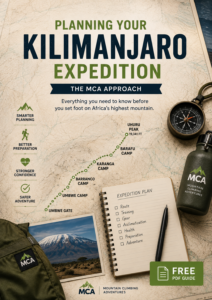
This complimentary guide explains the Mountain Climbing Adventures approach—from our summit philosophy and route selection to preparation, safety, and what makes our expeditions different.
Whether you ultimately climb with us or not, our goal is to help you make an informed decision.
When you’re ready, simply request your complimentary Expedition Guide.
Paul DeAngelis • Founder, Mountain Climbing Adventures
More than a travel guide.
More than an equipment manual.
More than another summit story.
Everything I wish every climber knew before stepping onto Kilimanjaro.
Drawing on nearly three decades of professional guiding experience, this comprehensive companion brings together practical preparation, expedition strategy, altitude science, leadership, and the lessons that only experience can teach.
Available at: Amazon · Barnes & Noble · Booktopia . YES24 · Hugendubel · Saxo · Orell Füssli . Kobo
The mess tents are large enough for our teams. Breakfast may include eggs, bacon, oatmeal, toast, fresh fruit, tea and coffee. Lunch is usually enjoyed on the trail and may include sandwiches, chicken, oranges, trail mix and juice. Afternoon snacks often include hot drinks, cookies and popcorn, while dinner typically consists of soup, chicken, rice, pasta, mashed potatoes, vegetables and fruit.
Your health is monitored throughout the expedition. If you are unable to continue, one guide and at least two porters will accompany you safely down the mountain. We remain in constant communication with trail access points so assistance is always available.
Our itinerary is intentionally longer than most operators because proper acclimatization dramatically improves safety and summit success.
Yes. Every campsite is located near a reliable water source. Our staff purifies all drinking water used for drinking, cooking and washing throughout the expedition. Proper hydration is one of the most important factors in climbing successfully.
Our clients are professionals, couples, families and individuals looking to challenge themselves through an extraordinary experience.
Over the years we’ve guided climbers as young as twelve and as old as seventy-six. Rather than focusing on age, we focus on preparation, attitude and creating the best possible experience for every climber.
Along the way you’ll also learn about Tanzania, Swahili language, local culture and the mountain itself—not simply hike to the summit.
Many disappointing experiences happen because people arrive in Africa, hire an unfamiliar guide and attempt to climb too quickly.
Our approach is different.
Preparation begins months before you arrive. We educate every climber about altitude, review equipment, discuss training, provide proper nutrition and hydration on the mountain, and follow an itinerary designed for acclimatization.
While many operators rush the climb, our philosophy is to give every climber the best possible opportunity to reach the summit safely.
Kilimanjaro expeditions vary dramatically in price—and in quality.
Our priority is providing an exceptional mountain experience while treating our guides, porters and staff fairly. We invest in experienced leadership, quality equipment, safety systems and proper support so you can focus on enjoying one of the greatest adventures of your life.
Altitude is one of our areas of expertise.
Preparation begins well before you leave home. During the expedition we monitor each climber, encourage proper hydration and nutrition, and follow an itinerary specifically designed for acclimatization.
Every expedition carries emergency oxygen, a hyperbaric bag and the equipment necessary to manage altitude-related illnesses should they occur.
Tanzania has two primary dry seasons. The first runs from December through March, and the second from July through September. Our expeditions are scheduled during these optimal climbing seasons.
Each campsite is selected before you arrive based on the size of the group and access to the best water source. Our porters arrive early to secure excellent locations.
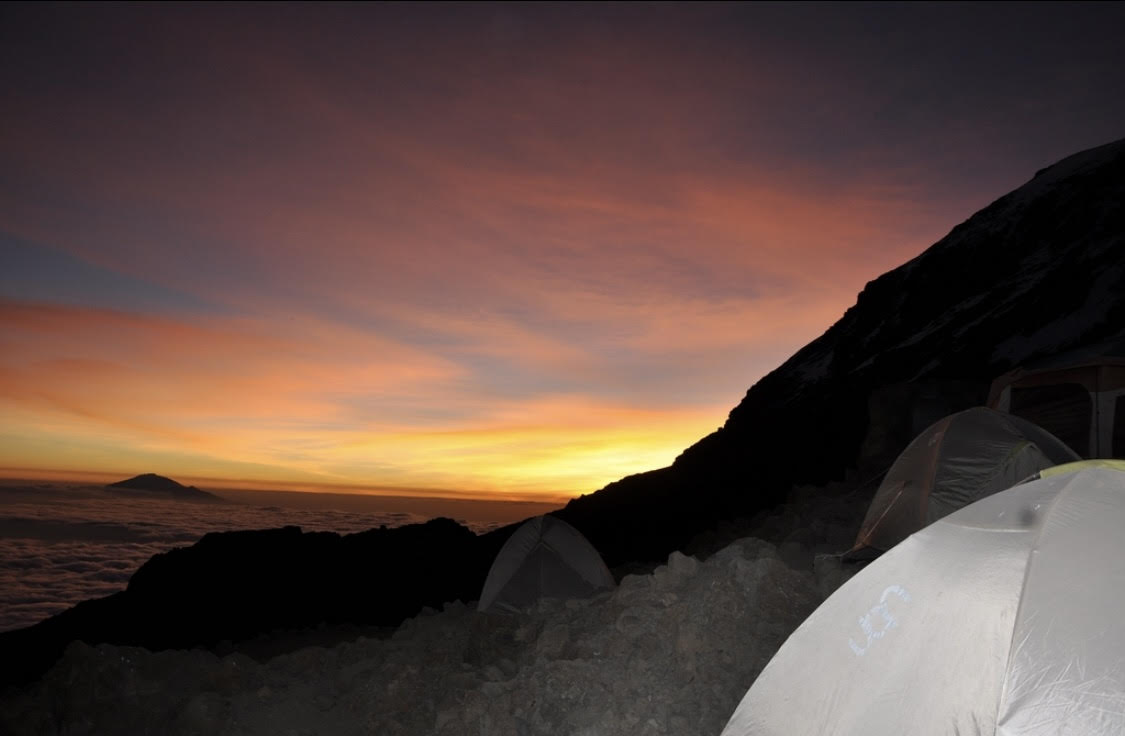
Our camps include client tents, dining tents, kitchen tents, porter tents and portable toilets. We also follow Leave No Trace principles, ensuring every campsite is left clean and pristine.
“Yes, I got sick at 13,000 feet. I couldn’t get warm and felt uncomfortable. Paul knew what to do. He stayed up with me all night and I was fine and made it to the summit.”
“No. I had complete confidence in Paul. I realized and appreciated his knowledge and listened to what he said.”
“I was never afraid with Paul at the helm. A good guide takes away one’s fears and apprehensions.”
“I had 100% faith in Paul. I knew he knew what he was doing. I had always been the leader, and now I had to put my faith in him. I never once hesitated to trust him.”
“Paul’s leadership is second to none. He organized every detail, prepared the entire team before the climb, and his mountain experience was obvious every single day.”
“Paul was an excellent leader. He kept us informed, explained everything clearly, monitored each climber individually, advised us when to take medication, and knew exactly what pace we should travel. I trusted him completely.”
Confident. Competent. Knowledgeable. Dedicated. Reassuring. Assertive. Motivating. Professional. Caring. Experienced. Passionate. Organized. Disciplined. Trustworthy.
“Paul prepared us for months in advance and made us understand how serious the climb was and why following the plan mattered.”
“Passionate with the ability to communicate the long-term vision while keeping everyone focused on the next step. He genuinely cares about every climber.”
“I would consider Paul a friend after the Kilimanjaro experience and happily recommend him to anyone.”
“I admire Paul’s knowledge, kindness, expertise and sense of humour. I don’t think the experience would have been the same without him and his team.”
“I’d do it all again in a minute—but I wouldn’t do a trip like this without Paul.”
“Exhilarating. Outstanding. Contemplative. Peaceful. Humbling. Exhausting. Spiritual. Memorable. Motivational. Emotional. Enriching.”
“An experience I will remember for the rest of my life.”
“Even after reading everything I could, I was worried about altitude and whether I would acclimatize. Following Paul’s guidance before and during the climb made it a non-issue. We saw other climbers struggle, which only reinforced how knowledgeable our guides were.”
“How difficult the final day was—how slowly you move and how much physical, emotional and mental energy it requires. That’s where Paul’s guidance and motivation made all the difference.”
“The final day exceeded every expectation I had with respect to the physical challenge.”
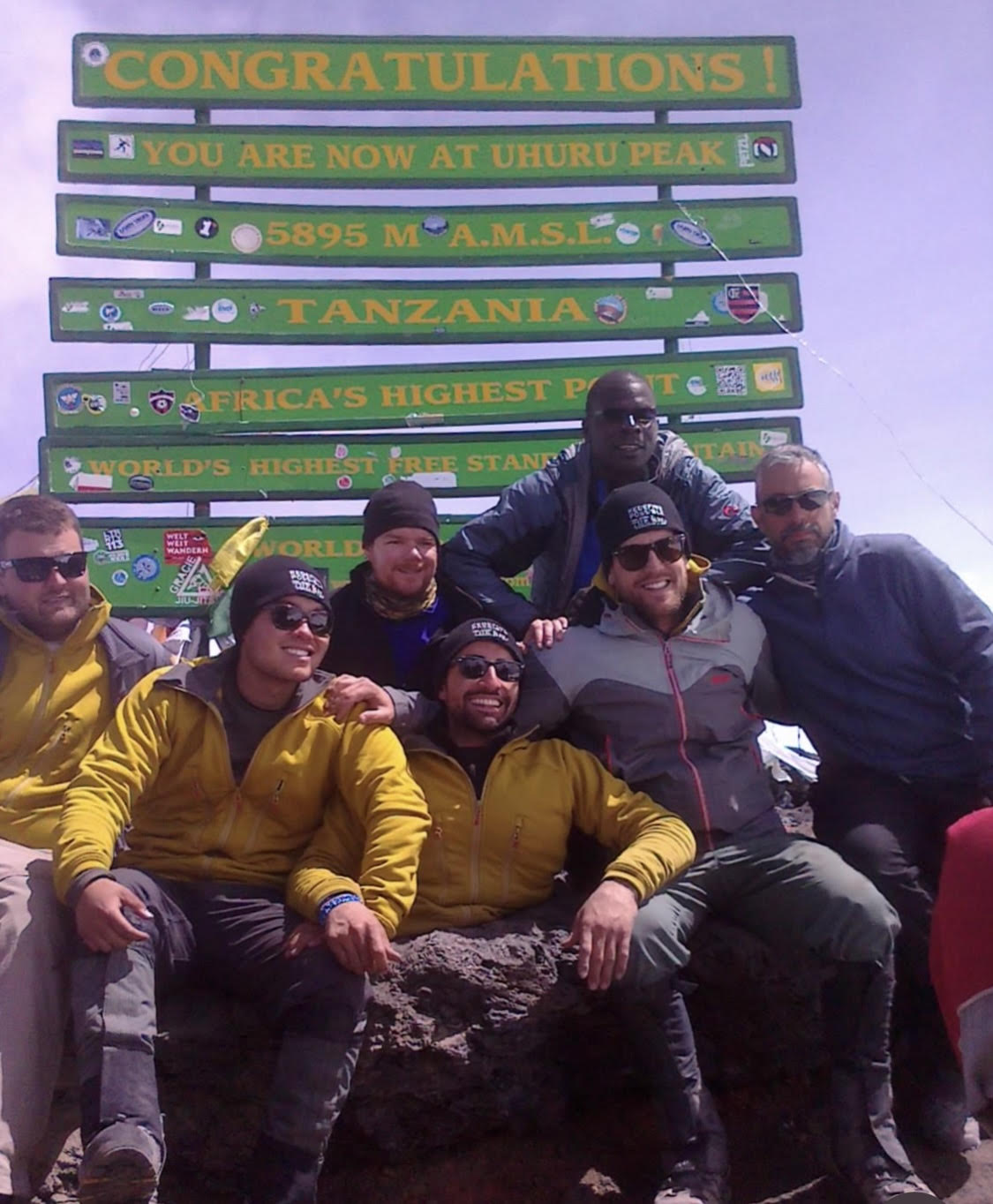
“I was surprised by how emotional I became when I reached the summit.”
“It feels incredible. You’ve done it. It’s an amazing feeling of accomplishment. You hope you can make it, but you never truly know until you’re standing there.”
“The emotions were overwhelming—a combination of complete exhaustion and pure elation. It’s the closest thing I’ve experienced to a spiritual moment.”
“I was exhausted, cold, overwhelmed… and then suddenly I realized I’d done it. The view was magnificent.”
“It was a glorious, clear morning. Everything was pristine, beautiful—it felt close to heaven. I didn’t want to leave.”
“Upon reaching the summit I was emotionally and physically drained. I’ve never experienced that level of exhaustion before. Achieving something so meaningful made every step worth it.”
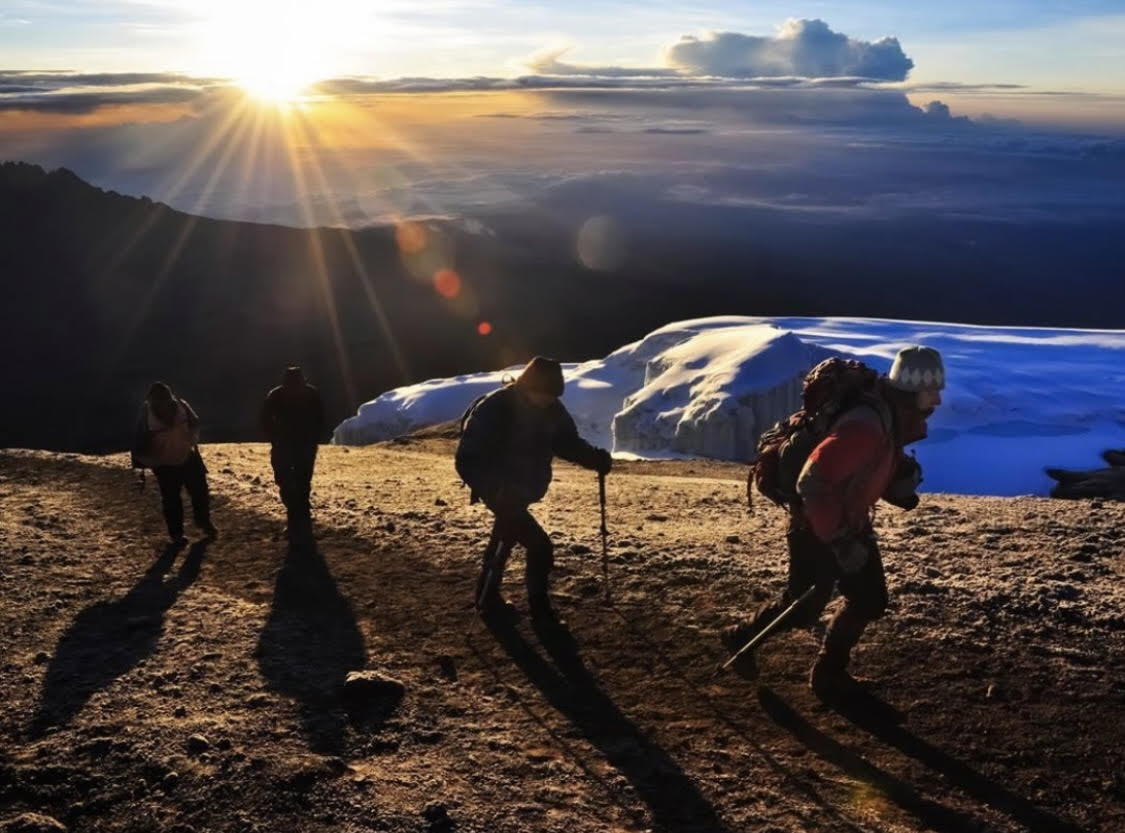
“Elation. Success. The glaciers were amazing.”